English
The worsening ecological environment is gradually awakening human awareness of environmental protection. Loving nature, protecting the environment, safeguarding human health, and achieving harmonious coexistence between humans and nature will become a permanent topic. Environmental protection products are not only the medium and long-term sustainable development strategy for enterprises in the future, but also an inevitable requirement for their survival and another focus of mutual competition.
On November 8, 2002, EU countries completed the legislation on the disposal of waste electrical and electronic equipment. On January 27, 2003, they officially promulgated the Waste Electrical and Electronic Equipment Directive (WEEE-2002/96/EC) and the Restriction of Hazardous Substances in Electrical and Electronic Equipment Directive (RoHS-2002/95/EC). The main purpose is to reduce waste from electrical and electronic equipment and establish a recycling and reuse system, thereby reducing the potential impact and harm of these substances on human health and the environment during disposal, landfilling and incineration. Since July 1, 2006, all electrical and electronic products specified in the WEEE Directive cannot contain the hazardous substances mentioned in the RoHS Directive (lead, mercury, cadmium, hexavalent chromium, polybrominated biphenyls (PBBs) and polybrominated diphenyl ethers (PBDEs)) when entering the European market.
The RoHS Directive and WEEE Directive cover 10 categories and 102 types of products under the management of hazardous substance restrictions and waste recycling. The first seven categories are China's main export electrical products. These two directives put forward higher environmental protection requirements for electronic and communication products, exert a huge impact on product exports, and involve the entire industrial chain related to products. It is a new issue for enterprises to develop green and environmentally friendly products, actively respond to EU directives, break through green trade barriers, and improve international competitiveness.
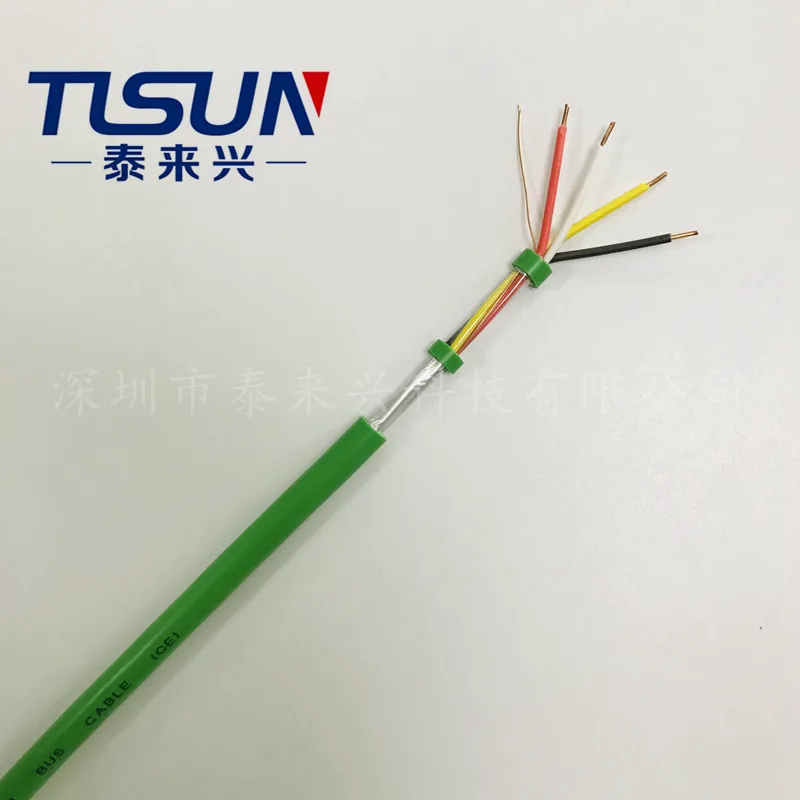
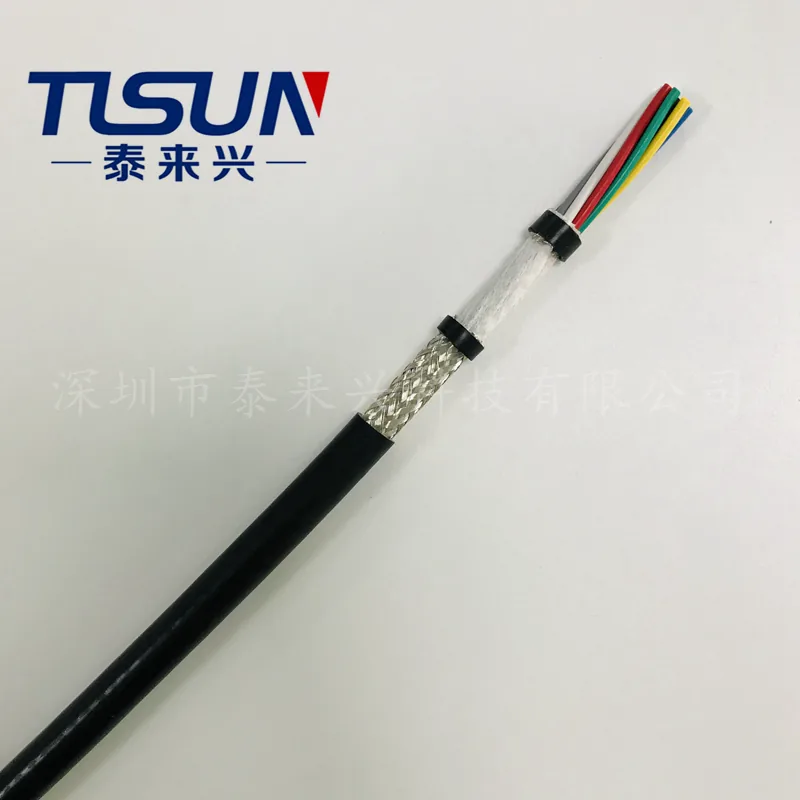
The environmentally friendly cables developed by Hengtong refer to those that meet the EU RoHS Directive.
In communication cables using polyolefins (such as polyvinyl chloride, polyethylene, polypropylene, etc.) as insulation and sheath materials, they contain lead used as flame retardants and heat stabilizers, as well as other heavy metal substances polluting the environment that coexist with lead and cadmium, and some halogenated organic compounds such as polybrominated biphenyls (PBBs) and polybrominated diphenyl ethers (PBDEs); the color masterbatch of the insulation layer contains a large number of inorganic pigments, which contain heavy metal elements such as lead, cadmium and chromium. The content of all elements must comply with the EU RoHS Directive.
Its main advantages are that no harmful substances are generated or emitted during the product manufacturing process; the final product does not contain substances harmful to human health and does not pollute the environment. However, the following factors lead to increased product costs:
The improvement of cable technical requirements leads to higher requirements for cable materials, thereby increasing material costs;
The investment in supporting testing methods for hazardous substances (testing equipment, testing experiments) increases the additional cost of products;
The increase in additional product costs caused by the consumption of materials (testing, production organization) and the maintenance costs of equipment and instruments;
The increase in product costs caused by the salaries of testing personnel;
Regional division and physical isolation increase management links, and the imbalance of local production capacity leads to unbalanced equipment utilization and a decline in overall production capacity.
To display the company's green and environmentally friendly products, the environmental protection cable logo designed by the Planning Department of the Group's Administrative Management Center reflects the RoHS Directive and the English information of the company name, as well as the characteristics of green and environmentally friendly cables.
Environmentally friendly cables have higher requirements for product technology:
The mechanical, physical and electrical properties of environmentally friendly cables shall not be lower than those of similar products;
The limit content of hazardous substances shall meet the provisions of EU RoHS (see Table 1 for details);
Products shall have clear green environmental protection logos;
Product packaging materials shall not contain harmful substances.
To achieve the environmental protection characteristics of products, it is necessary to define and mark raw materials, semi-finished products, finished products, production areas, production machines, etc., to avoid possible cross-contamination and mixed use, which increases the control links and management difficulty in the product manufacturing process.
The selection of environmentally friendly materials is the foundation and key to the development of environmentally friendly cables. When selecting and auditing suppliers and materials, the following factors should be focused on:
Mechanical, physical and technological properties of materials;
The limit content of hazardous substances in materials meets the requirements of the RoHS Directive;
The environmental protection characteristics of materials have been tested and confirmed by qualified testing institutions;
Material price;
Enterprise's environmental protection declaration and quality assurance;
The improvement and effectiveness of the enterprise's quality management and quality assurance system;
The enterprise's ability to compensate for losses caused by breach of contract and quality factors (comprehensive strength of the enterprise).
The control and management of materials is crucial. During the transition from ordinary cables to environmentally friendly cables or in the case of incomplete transition, the links such as material storage, physical isolation, marking, collection and distribution, and on-site use must be clear, accurate and refined to avoid the uncertainty of product environmental protection characteristics caused by material mixing and pollution.
In the production process of environmentally friendly cables, attention should be paid to and focus on controlling the following links:
Material control: Strictly control the material process in accordance with the above requirements;
Cleanliness of equipment, tools, molds and production areas, especially the extrusion equipment for insulation and sheath. If there is an alternating use, when producing environmentally friendly products, the screw, barrel, machine head and mold of the extruder must be disassembled and cleaned, and then cleaned with natural base material until confirmed clean before production.
The semi-finished products of each process of environmentally friendly cables must be marked with environmental protection flow cards, and semi-finished products and finished products must be stored separately to avoid confusion.
The cooling water and extrusion molds used for environmentally friendly cables should preferably be independent systems; if it is really difficult, the supporting auxiliary systems should be confirmed through product testing.
At present, environmentally friendly cables are tested and evaluated by qualified and industry-recognized testing institutions for 6 substances (lead, cadmium, hexavalent chromium, mercury, polybrominated biphenyls (PBBs) and polybrominated diphenyl ethers (PBDEs)) in cable materials or finished products in accordance with the provisions of the EU RoHS Directive.
The main qualified and industry-recognized testing institutions include: SGS-CSTC Standards Technical Services Co., Ltd. Shanghai Branch (Shanghai SGS), Beijing Pony Testing International Group, etc.
In addition, domestic food, medical and health, metallurgy, scientific research institutions, petrochemical, agriculture, universities and some electronic and electrical manufacturing enterprises have the testing conditions.
Microwave digestion system: Used for sample pretreatment. The reliable and widely used one is MWS-3+ from BERGHOF, Germany.
The following tests introduce the common testing equipment and methods used by some testing institutions and enterprises to comply with the EU RoHS Directive:
Inductively Coupled Plasma Atomic Emission Spectrometry (ICP-AES): It is a multi-element rapid determination technology that can measure lead, cadmium, total chromium, mercury, etc. in the directive. It has low detection limit and high accuracy. The detection limit for Pb, Cd and Cr can reach below 1ppb, and the sample needs pretreatment. Domestic testing institutions and some enterprises are equipped with PROFILE direct-reading echelle ICP emission spectrometer manufactured by LEEMAN, USA.
Flame Atomic Absorption Spectrometer (AA): Produced by PerkinElmer, USA. It has simple configuration and quick and convenient operation; most samples do not need pretreatment; it has low testing requirements, is a practical configuration suitable for enterprises, and can meet the testing requirements of environmentally friendly cables; its detection accuracy is equivalent to that of atomic emission spectrometry. The investment cost is moderate, but the detection efficiency is low.
X-ray Fluorescence Spectrometer (EDX-HS700): Produced by Shimadzu, Japan. It has simple configuration and quick and convenient operation; most test samples do not need pretreatment; the detection accuracy is not high, and the detection limit is more than 10 times that of the above two instruments; the testing requirements are low, but standard samples are needed for calibration and comparison.
Mercury Analyzer: Specialized in measuring the content of Hg in samples. Domestic testing institutions and most enterprises are equipped with LEEMAN automatic mercury analyzer from the United States.
Ultraviolet Spectrophotometry (UVS): Specialized in detecting the content of hexavalent chromium in samples. The 6010 UV/Vis spectrophotometer from AGILENT, USA is the preferred equipment for some testing institutions. In addition, domestic instruments can also meet the use requirements.
Gas Chromatography-Mass Spectrometry (GC-MS): It can analyze PBBs and PBDEs in the directive. A typical equipment is 5973 from AGILENT, USA.
Fourier Transform Infrared Spectroscopy (FTIR): It can detect the content of PBBs and PBDEs in samples.
Pure water system: Used for sample dissolution and dilution. A good equipment is PureLab Classic from PALL, USA, and domestic equipment can also meet the use requirements.
The process of product environmental protection and its continuous maintenance is not an overnight task. Especially in the product and the entire supply chain of the product, the expensive testing costs have caused a certain burden on the low-profit cable products. How to start from the source, establish an effective quality control and management system, and ensure authenticity and accuracy...
Shenzhen Tlsun Technology Co.,ltd
86-755-83011830
86-755-83011830
86-755-83011830
+8615914188669
+8615914188669
203A, Building C2, Zhigu, No. 6, Xiawei Industrial Zone 1st Road,Zhangkengjing Community,Guanhu Street,Longhua District,Shenzhen